
The seventh Steering Committee meeting of the “Effective Implementation of Judicial Reforms in Mongolia” (Twinning) Project was held on 16 October 2026.
Chief Justice of the Supreme Court of Mongolia, Tsogt Tsend, opened the meeting by highlighting key achievements during the reporting period and presenting his views on several activities to be undertaken during the remaining period of the Project.
He expressed his interest in exploring opportunities for cooperation, including the engagement of experts or the implementation of necessary measures, to address pressing issues facing Mongolia’s judicial system, particularly those relating to pre-trial detention measures.
He also emphasized the need to ensure that information on the manuals developed, activities implemented, and results achieved under the Project is disseminated effectively and made accessible to judges, court staff, and the general public.
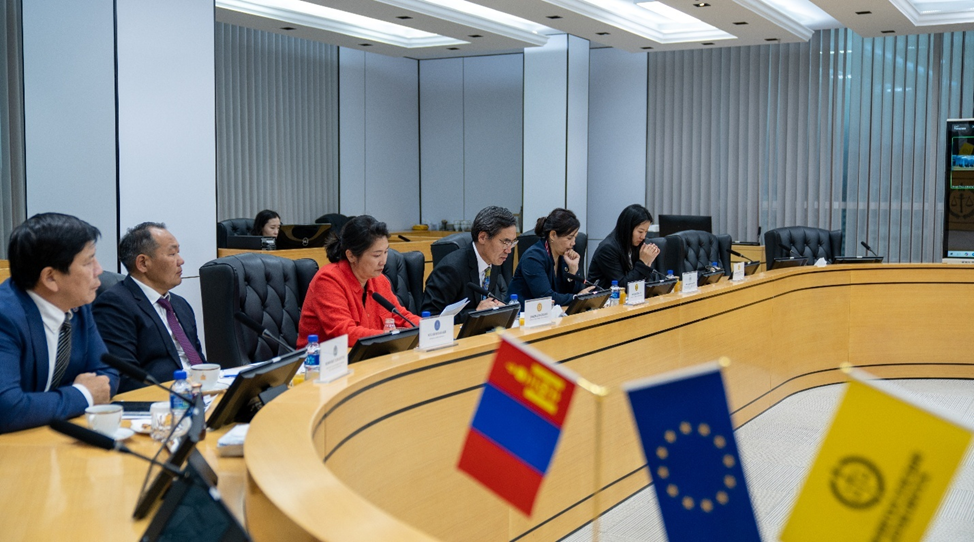
Christoph Kopecky, the Project’s Resident Twinning Adviser, presented the sixth quarterly report and the work plan for the upcoming quarter.
“During the reporting period, a wide range of activities, including official visits, meetings, training sessions, and discussions, were successfully organised under the Project. In cooperation with the Judicial Academy, we developed and published the training manual Legal Reasoning and Application of Law. The training manual Effective Conduct of Court Hearings and Methodology for Amicable Dispute Resolution is now ready for publication. Work on developing e-learning modules is also ongoing.
In the coming quarter, training sessions, seminars, and related activities will be organised as planned in cooperation with the Criminal and Civil Chambers of the Supreme Court of Mongolia and the Judicial Academy. We are also working with the Information Security and Technology Division and a contracted company on the development of an AI-powered electronic case-law database.
In addition, the Project will support the commencement of operations of the Specialized Family and Children’s Court and organise training on working with juveniles involved in criminal and civil proceedings, as well as on preventing corruption and disciplinary violations. Planned activities will also be implemented to improve internal court procedures and strengthen professional ethics among court staff.
Furthermore, we plan to compile the reports and recommendations developed under the Project into a comprehensive publication,” he said.
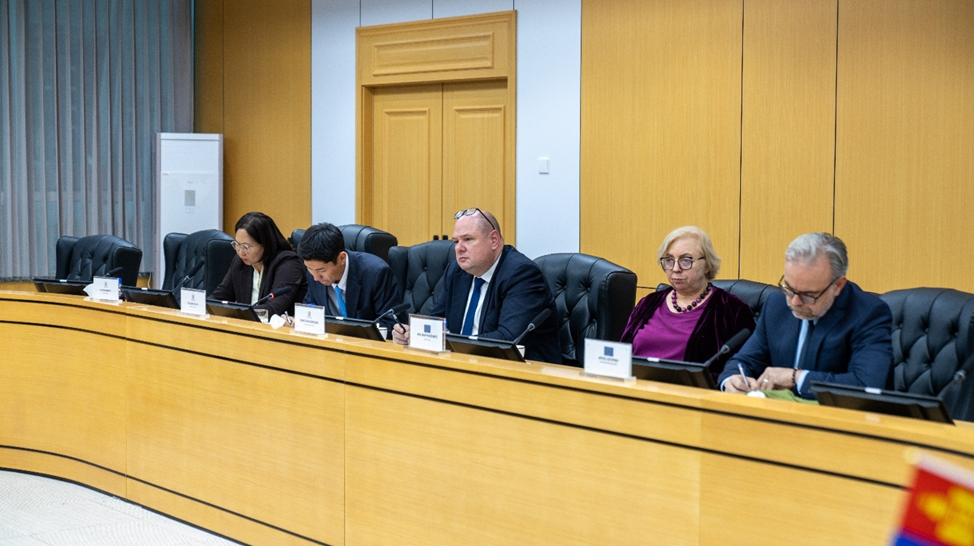
The meeting was attended by Ts. Tsogt, Chief Justice of the Supreme Court of Mongolia and counterpart to the Project’s Resident Twinning Adviser; Justice Banzragch Gochoo; Erdenechimeg Dashpuntsag, Director of the Judicial Academy; Gerelmaa Zorigtbaatar, Acting Head of the Foreign Relations and Cooperation Office; Ina Marčiulionytė, Ambassador of the European Union to Mongolia; Arnaud Appriou, Programme Manager; Andreas Stüve, German Project Leader; Christoph Kopecky, Resident Twinning Adviser; Sugar B. , Member of the Judicial Disciplinary Committee; and Munkhbat D. , Head of the Department of Foreign Relations and Cooperation of the Judicial General Council.